
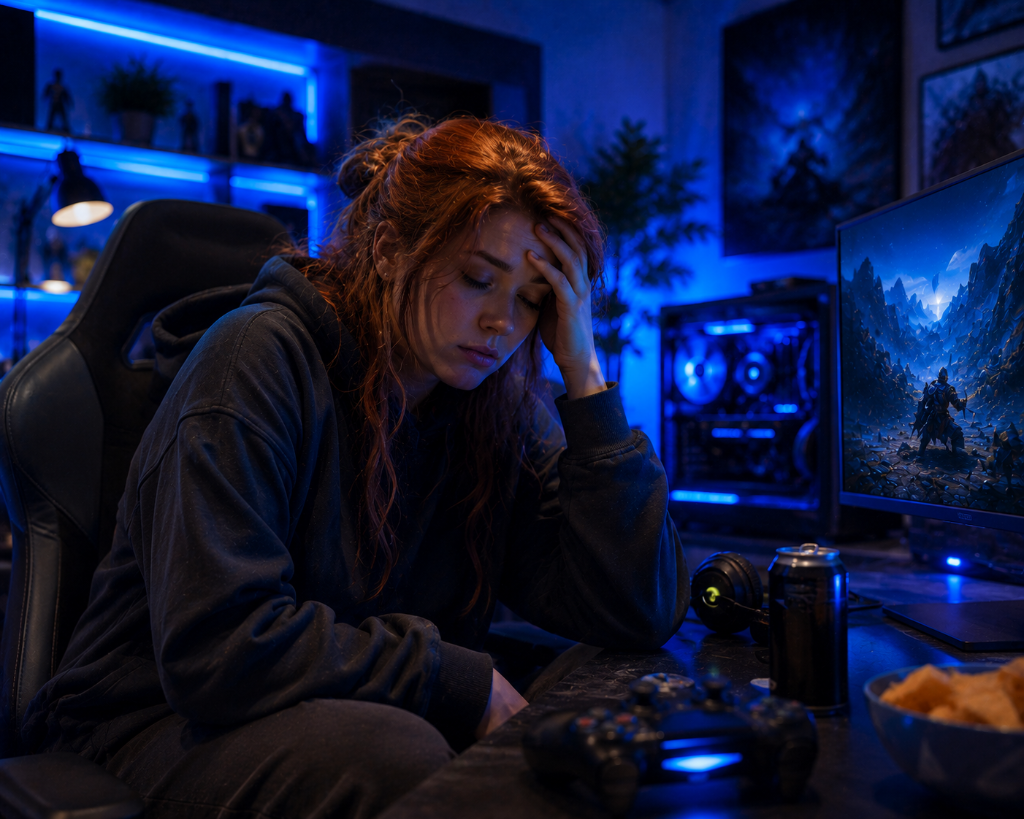
Gaming can be fun, relaxing, challenging, and rewarding. But sometimes, it starts to feel draining.
You may sit down to play and notice that the excitement is not there. A game that used to feel fun now feels like work. You keep playing, but you feel tired, irritated, distracted, or pressured to continue. Instead of finishing a session refreshed, you leave feeling worse than when you started.
For someone building video games as a hobby, that can be confusing.
You may wonder:
“Am I burned out?”
“Is this game too stressful for me?”
“Should I keep playing or take a break?”
“Why does gaming feel draining instead of enjoyable?”
Those are important questions. Gaming burnout does not always mean gaming is bad for you. It usually means something about your play pattern, game choice, session length, difficulty, mood, or expectations needs adjustment.
The goal is not to play more no matter what.
The goal is to build a gaming habit that gives energy back instead of slowly draining it.
Looking for more long-term gaming guidance? Visit the XP Levels Blog for guides that help you enjoy video games as a hobby in a healthy, focused, and sustainable way.
When Fun Starts Feeling Heavy
Imagine a beginner gamer who has started taking the hobby seriously.
At first, everything feels exciting. They find a game they like, play often, learn the systems, make progress, and feel proud of improving.
Then the pattern changes.
They start playing longer than planned. They keep repeating difficult sections even when they are tired. They chase rewards that no longer feel satisfying. They stay in a stressful multiplayer environment because they do not want to fall behind. They keep playing the same game even though they are not enjoying it anymore.
Eventually, the hobby starts to feel heavy.
They think, “Maybe I’m losing interest in gaming.”
But another player notices the signs earlier.
They realize the game is not the only issue. The issue is how they are approaching it. Their sessions are too long. Their goals are too demanding. Their breaks are too short. Their game choice does not match their energy. They are playing from pressure instead of interest.
So they adjust.
They shorten the session. They switch to a calmer game for a few days. They stop chasing optional tasks. They take a break after frustration instead of pushing through. They return later with a clearer mind.
The hobby did not disappear.
It became lighter again.
That is the difference between ignoring burnout and responding to it.
Burnout Is a Signal, Not a Failure
Gaming burnout becomes easier to handle when you stop treating it as a personal failure and start treating it as feedback.
Burnout usually means the effort, stress, time, or pressure of gaming has become higher than the reward you are getting back.
That can happen for many reasons.
A game may be too intense for your current mood.
A difficulty setting may be creating frustration instead of challenge.
A multiplayer environment may be adding social pressure.
A long session may be draining your attention.
A grind may be turning progress into obligation.
A game may no longer match what you want from the hobby.
A schedule may be too crowded for heavy gaming sessions.
This is why burnout needs interpretation, not panic.
Instead of asking, “Why don’t I enjoy gaming anymore?” ask:
“What part of gaming is draining me right now?”
That question turns the problem into something you can adjust.
Burnout can come from the game, but it can also come from the pattern around the game.
The game might still be good.
The hobby might still fit you.
But the current setup, pace, goal, or expectation may need to change.
What to Ignore for Now
When trying to avoid gaming burnout, ignore anything that turns the hobby into pressure.
Ignore the need to finish every game.
Ignore daily login rewards if they feel like chores.
Ignore grinding that no longer feels worth it.
Ignore competitive rankings if they make every session stressful.
Ignore playing longer just because you already started.
Ignore the belief that taking breaks means you are quitting.
Ignore the pressure to keep up with friends, trends, or new releases.
Ignore the idea that a “real gamer” always pushes through.
For now, focus on what keeps the hobby sustainable:
Do I feel better or worse after playing?
Am I playing from interest or obligation?
Is this game matching my current energy?
Can I stop at a healthy point?
Is the challenge still enjoyable?
Would a break, shorter session, easier setting, or different game help?
Gaming should have effort, but it should not constantly leave you depleted.
Common Gaming Burnout Signs
If gaming feels stressful instead of fun, it does not mean you are doing the hobby wrong.
It may mean the game’s pace, challenge, social environment, or pressure level is too high right now.
If you feel tired after playing instead of relaxed, it does not mean gaming cannot be relaxing.
It may mean the session was too long, too intense, or poorly matched to your energy.
If you feel irritated by small mistakes, it may mean your focus is already tired.
If you keep playing but feel no reward, it may mean the game has become a routine instead of an enjoyable choice.
If you dread opening a game, it may mean the game has become associated with pressure, grind, or frustration.
If you feel guilty for taking a break, it may mean gaming has started to feel like an obligation instead of a hobby.
These signs are useful.
They help you decide whether to rest, adjust, switch games, change goals, or step away for a while.
Burnout vs. a Bad Session
Not every frustrating session is burnout.
Sometimes you are just tired. Sometimes the game has one difficult section. Sometimes you had a bad day before you started playing. Sometimes you need food, sleep, a break, or a different mood.
A bad session is usually temporary.
You may feel frustrated today, but still want to return later.
Burnout feels heavier.
You may feel drained before you even start. You may keep playing out of habit, guilt, or pressure. You may stop feeling rewarded even when you make progress.
A simple way to tell the difference is to ask:
“Do I want a better version of this session, or do I need distance from this game for now?”
If you want a better version, adjust the session.
If you need distance, take a break.
Both are valid.
Notice, Adjust, Recover
Burnout prevention works best as a simple loop.
Notice the drain.
Name the cause.
Adjust one thing.
Recover before returning.
Repeat.
For example:
Signal: You feel tired after every session.
Cause: Sessions are too long.
Adjustment: Play for 30 minutes instead of two hours.
Recovery: Stop while you still feel interested.
Signal: The game feels stressful.
Cause: Difficulty is too high right now.
Adjustment: Lower difficulty or practice one skill.
Recovery: Return when challenge feels manageable.
Signal: Multiplayer feels draining.
Cause: Other players are adding pressure.
Adjustment: Mute chat, play casual modes, or switch to solo play.
Recovery: Choose a calmer session next time.
Signal: Progress feels like a chore.
Cause: You are grinding rewards you do not care about.
Adjustment: Skip optional tasks or change games.
Recovery: Focus on what feels meaningful.
This loop keeps gaming from becoming all-or-nothing.
You do not have to quit the hobby to recover.
You can change the way you are engaging with it.
Before Playing
Before a session, ask:
What kind of energy do I have right now?
Do I want challenge, relaxation, progress, creativity, or social play?
How long can I play without feeling drained?
Is this game a good match for my mood today?
What is one reasonable goal for this session?
Can I stop at a clear point?
Am I playing because I want to, or because I feel like I should?
What would make this session feel healthy and worth it?
These questions help you prevent burnout before the session begins.
While Playing
While playing, ask:
Am I still enjoying this?
Am I focused, or am I forcing myself to continue?
Is the challenge motivating or irritating?
Do I feel more energized or more drained?
Am I chasing rewards that still matter to me?
Would a break help me reset?
Would lowering difficulty, switching modes, or stopping now protect the hobby?
Am I playing past the point where the session stopped being useful?
These questions help you catch burnout while you still have room to adjust.
After Feeling Drained
After a draining session, ask:
What part of the session wore me out?
Was it the game, the difficulty, the session length, the social environment, or my mood?
Did I ignore signs that I needed a break?
Was I playing from interest, habit, guilt, or pressure?
Would a shorter session have helped?
Would a calmer game fit better next time?
Do I need a break from this game or from gaming in general?
What one adjustment would make the next session healthier?
These questions help you recover instead of repeating the same draining pattern.
Breaks Protect the Hobby
It is normal for gaming energy to rise and fall.
Some games are intense. Some sessions take more focus than expected. Some weeks are busy. Some days your attention, patience, and energy are lower than usual.
That does not mean gaming is no longer for you.
It means your hobby needs to fit your real life.
You are allowed to pause.
You are allowed to stop before finishing a mission.
You are allowed to lower the difficulty.
You are allowed to skip optional grind.
You are allowed to play something calmer.
You are allowed to take a break from a game you like.
You are allowed to return later.
Burnout recovery is not quitting. It is maintenance.
Video games as a hobby last longer when you protect your energy instead of spending it all at once.
Play in a Way You Can Return To
Gaming burnout is like running a long trail too fast. The trail may be beautiful, but if you ignore fatigue, skip rest, and push beyond your pace, the experience stops feeling good.
The goal is not to stop moving forever.
The goal is to find a pace you can return to.
Before your next session, choose one healthy limit. Set a shorter play time, pick a calmer game, lower the difficulty, skip optional grind, mute stressful chat, or stop at a clear point.
Then notice how you feel afterward.
Video games as a hobby become more sustainable when gaming gives energy back instead of draining it away.
Ready to build a healthier long-term rhythm? Continue your journey in Next Level Gaming, where you can learn how to keep gaming balanced, enjoyable, and sustainable over time.
Leave a Reply