
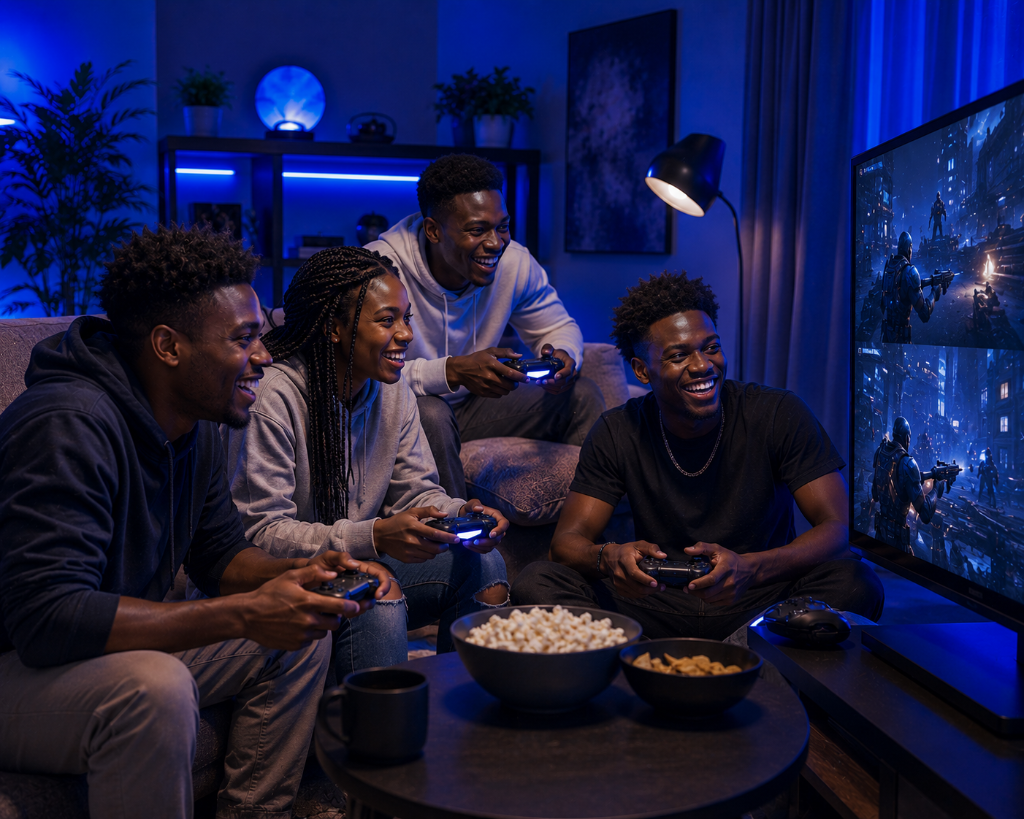
Social gaming can sound intimidating when you are new.
You may hear people talk about online multiplayer, voice chat, co-op missions, guilds, clans, teams, lobbies, friend codes, party invites, rankings, and competitive matches. For someone who is only curious about video games as a hobby, that can make gaming feel more like a social test than a relaxing activity.
You may wonder:
“Do I have to play with other people?”
“What if I make mistakes in front of them?”
“What if I slow everyone down?”
“What if I just want to play alone?”
Those concerns are normal. But social gaming does not have to mean jumping into competitive online matches or talking to strangers on a microphone.
Social gaming simply means choosing how much connection you want around your play experience.
You can play alone. You can play beside someone. You can play with family. You can play online with friends. You can watch others play. You can discuss games without playing multiplayer at all.
The goal is not to force yourself into the most social version of gaming.
The idea is to find the level of social interaction that makes video games as a hobby feel more enjoyable, not more stressful.
Looking for more beginner-friendly gaming topics? Visit the XP Levels Blog for simple guides that help you explore video games as a hobby at your own pace.
One Tiny Social Step
Imagine someone who wants to try gaming but assumes the hobby is mostly online competition.
They see clips of fast matches, people shouting into headsets, teammates blaming each other, and experienced players moving at a speed that looks impossible to follow.
The beginner thinks, “I do not want that kind of pressure.”
So they avoid gaming altogether, even though they might enjoy story games, puzzle games, cozy games, creative games, or relaxed co-op games.
Now imagine a different beginner.
They start by playing alone. No audience. No voice chat. No pressure to perform. They choose a simple game and learn at their own pace.
Later, they talk to a friend about the game. The friend gives a small tip. Then they try a casual co-op game together. They do not play to win quickly. They play to laugh, explore, and learn.
The beginner still makes mistakes. They go the wrong way. They press the wrong button. They need help understanding what to do next.
But because the social setting is low-pressure, the mistakes do not feel embarrassing. They feel like part of the experience.
That is the difference.
Social gaming works best when it matches your comfort level.
Social Gaming as Leverage
Social gaming becomes easier when you stop thinking of it as “playing with people” and start thinking of it as choosing the right amount of interaction.
There are many ways to make gaming social.
You can play alone and talk about the game later.
You can sit beside someone while one person plays and the other watches.
You can take turns.
You can play a local multiplayer game in the same room.
You can play cooperative games where players help each other.
You can play online with friends.
You can join communities, forums, or groups without playing directly with anyone.
You can watch guides, streams, or gameplay videos to feel connected to the hobby.
None of these are more “real” than the others. They are different ways to participate.
For beginners, this matters because pressure usually comes from choosing the wrong social setting too early.
A competitive online game may be too much if you are still learning basic controls.
Voice chat may feel stressful if you are not ready to talk while playing.
Playing with strangers may feel uncomfortable if you do not know the game’s rules yet.
A fast team-based game may feel overwhelming if you are still figuring out the screen, buttons, and objectives.
That does not mean social gaming is bad.
It means the starting point matters.
A better first step is to choose a social format that gives you space to learn.
For example, playing a simple co-op game with one patient friend is very different from joining a ranked online match with strangers. Watching someone play and asking questions is different from being expected to perform. Playing a casual party game is different from joining a serious competitive team.
The useful question is not, “Should I play alone or with others?”
The better question is, “Which version of social gaming reduces pressure and helps me enjoy the hobby?”
That turns a confusing social choice into a practical decision.
Pick the Right Social Level
A missing piece for many beginners is understanding that social gaming has levels.
You do not have to jump from solo play straight into online multiplayer.
You can move slowly.
Solo play gives you privacy and time to learn.
Shared play means someone watches, helps, or talks with you while you play.
Local play lets you play with someone nearby, often with less pressure than online matches.
Co-op play focuses on helping each other instead of defeating each other.
Casual online play lets you try multiplayer without treating every match like a serious test.
Competitive online play usually adds the most pressure and is better saved until you understand the game better.
This makes social gaming easier to approach. You are not choosing between “alone forever” and “online with strangers.”
You are choosing the next social step that feels manageable.
For many beginners, the best first social step is not multiplayer. It is simply talking about a game with someone who is patient.
What to Ignore for Now
When starting with social gaming, ignore anything that makes the hobby feel like a performance.
Ignore ranked matches.
Ignore competitive pressure.
Ignore voice chat with strangers.
Ignore toxic comment sections.
Ignore people who expect beginners to play like experts.
Ignore the idea that multiplayer is required.
Ignore the belief that playing alone means you are missing out.
Ignore the pressure to join every invite.
Ignore games where other people’s impatience ruins your learning.
Ignore communities that make beginners feel small for asking basic questions.
For now, focus on simple social options:
A game you can pause.
A game you can play alone first.
A friend or family member who is patient.
A co-op game with low pressure.
A setting where mistakes are allowed.
A way to leave or stop without guilt.
Social gaming should add enjoyment. It should not make you feel trapped.

Common Social Gaming Mistakes
If you feel nervous playing with others, it does not mean social gaming is not for you.
It may mean the setting has too much pressure too soon.
If you make mistakes in co-op, it does not mean you are ruining the game.
It may mean you are still learning timing, controls, objectives, or teamwork.
If you dislike playing with strangers, it does not mean you are antisocial.
It may mean you prefer safer, more familiar gaming spaces.
If voice chat feels uncomfortable, it does not mean you are doing gaming wrong.
It may mean text chat, quiet co-op, or solo play fits you better.
If a multiplayer game feels chaotic, it does not mean you cannot learn.
It may mean the game expects too much awareness before you have built the basics.
If someone is rude or impatient, it does not mean you are the problem.
It may mean that person or community is not beginner-friendly.
If you feel relieved after turning chat off, that does not mean you failed socially.
It may mean you created the right environment for yourself.
One uncomfortable social experience should not define the entire hobby.
Social Boundaries Matter
Social gaming becomes more enjoyable when you know what you are allowed to say no to.
You can decline an invite.
You can mute chat.
You can leave a lobby.
You can play without a microphone.
You can say, “I’m still learning.”
You can choose casual modes.
You can stop playing with people who make the game stressful.
You can play alone even if others prefer multiplayer.
This matters because beginners often feel pressure to match the pace, skill, and expectations of more experienced players.
But video games as a hobby should fit your comfort level too.
A good gaming friend or community gives you room to learn. They do not turn every mistake into pressure.
Tester’s Mindset
Social gaming works best when you test your comfort level slowly.
Start with a low-pressure option.
Play for a short session.
Notice how the experience felt.
Ask what made it easier or harder.
Adjust the social setting.
Try again.
For example:
If playing online with strangers felt stressful, try playing alone or with one trusted friend.
If voice chat felt distracting, use text chat or turn chat off.
If co-op felt fun but confusing, choose a slower co-op game.
If playing alone felt peaceful but lonely, talk about the game with someone afterward.
If competitive matches felt too intense, try casual modes.
If a friend helped you enjoy the game, play another short session together.
If a group moved too fast, try playing with fewer people next time.
This process helps you build your social gaming style through experience instead of pressure.
You are not deciding once and forever whether you are a solo gamer or social gamer. You are learning which situations help the hobby feel better.
Before Playing
Before choosing a social gaming experience, ask:
Do I want to play alone, with one person, or with a group?
Do I want to talk while playing, or stay quiet and focus?
Do I want a cooperative game or a competitive game?
Do I want to play with friends, family, or strangers?
Can I leave or pause without causing a problem?
Is this game beginner-friendly, or does it expect experience?
Will this social setting make the game more enjoyable or more stressful?
What boundary do I want to set before I start?
These questions help you choose the right environment before pressure appears.
During Play
While playing socially, ask:
Do I feel relaxed enough to learn?
Am I enjoying the interaction, or am I only worried about mistakes?
Can I ask questions without feeling judged?
Is the pace too fast for me?
Are other players helping, rushing, or pressuring me?
Do I need to mute, pause, slow down, or switch modes?
Would this be more enjoyable alone or with a different person?
Am I playing because I want to, or because I feel pressured to continue?
These questions help you stay aware of the experience while it is happening.
After Playing
After a social gaming session, ask:
What part felt fun?
What part felt stressful?
Was the pressure from the game, the people, the pace, or my expectations?
Did I feel supported or judged?
Would I try that format again?
Should I play alone first before joining others next time?
Do I need a more casual game, a smaller group, or a better community?
Did I need less social pressure, or simply more time learning the game?
What did this session teach me about how I like to play?
These questions help you learn from the session without turning one awkward moment into a reason to quit.
You Are on the Right Track
You do not have to be outgoing to enjoy video games as a hobby.
You do not have to use voice chat. You do not have to play with strangers. You do not have to join competitive matches. You do not have to accept every invite. You do not have to prove yourself to anyone.
Playing alone is valid.
Playing with one trusted person is valid.
Watching, learning, and discussing games is valid.
Playing casually is valid.
Trying multiplayer and deciding it is not for you right now is also valid.
It is normal to feel nervous when other people are involved. Games can already be new and unfamiliar. Adding social pressure can make everything feel heavier. That does not mean you are failing. It means you need a safer starting point.
A good social gaming experience should make the hobby feel more welcoming, not more demanding.
You are allowed to choose the kind of connection that fits you.
Bring Your Social Energy
Social gaming is like a potluck picnic: bring what you enjoy, join or leave when it suits you, share a little if you like, and remember nobody expects perfection.
Social gaming does not have to start with strangers, pressure, or competition.
Start with the smallest social step that feels comfortable. Play alone first if needed. Talk about a game with a friend. Watch someone play. Try a relaxed co-op session. Turn off chat if it helps. Choose casual modes before competitive ones.
Then notice how the experience feels and adjust from there.
Video games as a hobby give you many ways to participate. The best starting point is the one that lets you enjoy the game without feeling pressured to perform.
Ready to explore games that match your social comfort level? Continue your journey in Exploring Gaming, where you can compare solo, co-op, casual, and multiplayer experiences before choosing how you want to play.
Leave a Reply