
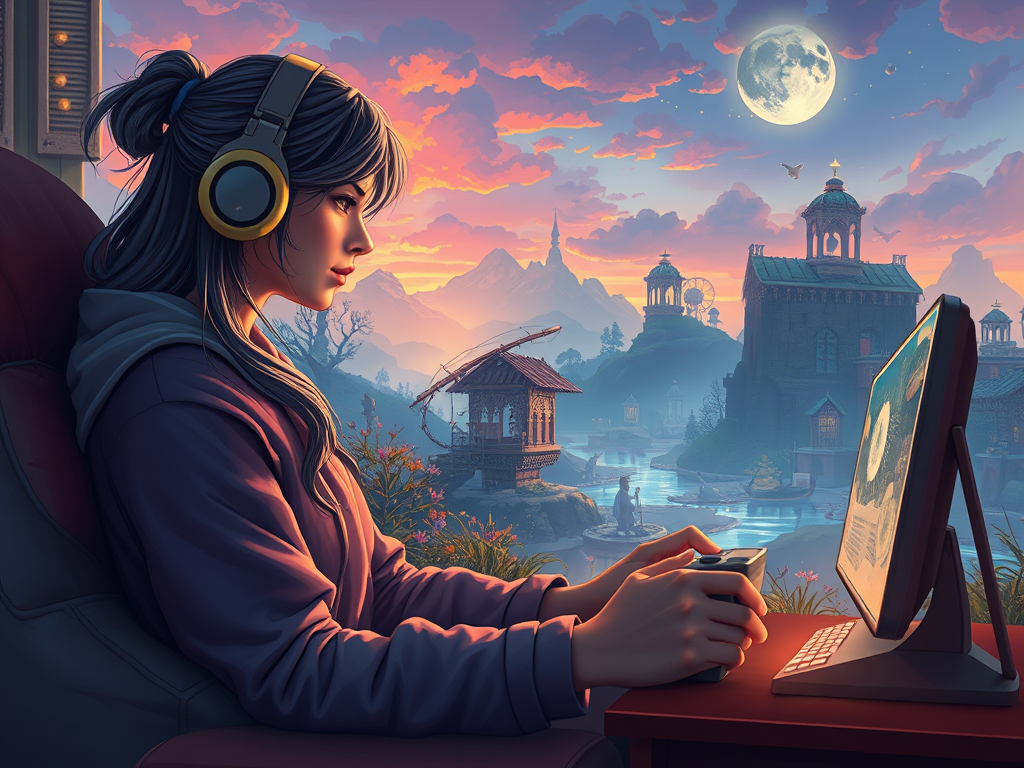
As the busy day unfolds, the gamer has flashbacks to yesterday’s gameplay. She says softly, “We need to build our home before nightfall. All the evil creatures come out at night.”
Even during her lunch break, she’s replaying the adventure in her mind — solving problems, crafting plans, and imagining her next move. That’s the beauty of gaming: it keeps our minds curious, creative, and alive long after we set the controller down.
Gaming isn’t just about winning or losing; it’s about solving problems, sparking ideas, and feeling rewarded as you grow. The best part of all, it takes your mind off everyday stress and replaces it with possibility.
Finding Purpose in Gaming
When I started gaming online, I discovered something amazing: every player had their own reason to play.
The Fisher — Some players spent hours by the water, fishing peacefully inside the virtual world. They weren’t chasing trophies — they were chasing calm.
The Crafter — Others enjoyed collecting materials, crafting items, and selling them in the in-game market. It was creativity and entrepreneurship rolled into one.
The Adventurer — For me, it was about leveling up my character and joining others to defeat monsters in dungeons. Together we explored, conquered, and created stories in real time.
Every gamer I met had their own story — a reason they logged in, a purpose that mattered to them.
A Look into a Gamer’s Day
A player shouts, “I want an epic armor set!” and instantly other gamers respond with tips and encouragement. Gaming is like any other hobby — it reflects who you are and what you need most. Whether you crave calm, creativity, or challenge, there’s a game genre designed just for you.
Casual Games: Fun, light, and perfect for quick relaxation.
Simulation Games: Build, craft, or farm at your own pace.
Adventure Games: Explore worlds, stories, and imagination.
Gaming provides the structure — the stage — for your personal adventure. Every world you enter gives you a chance to discover a new side of yourself.
What to Expect
Gaming as a hobby provides different experiences for a variety of mood types. Expect gentle mechanics and soothing audiovisual design that help lower stress and shift your focus.
Games like Stardew Valley or Animal Crossing offer slow, routine tasks and small, consistent rewards. Other games like Journey provide meditative exploration with little pressure.
The Benefits
One of the top—and my favorite—benefits of playing video games is the emotional and wellbeing boost they can provide. Games create safe spaces to feel, reflect, and reset: narrative-driven titles like Journey, Gris, Celeste, or Life Is Strange offer story arcs that help players process emotions and build empathy.
Warm games like Stardew Valley, Animal Crossing, and Spiritfarer give tasks that lower stress and provide comfort.
Family Orientation / Family Friendliness
Beyond convenience, consoles like Xbox and PlayStation bring family-friendly benefits that make gaming easy. They offer local co‑op and split‑screen play (try Overcooked, Rocket League, Minecraft, or Lego titles), quick pick‑up sessions that fit family schedules, and multiple player profiles.
Built‑in parental controls let caregivers create child accounts, set screen‑time limits, restrict game ratings and online interactions.
Family subscriptions (Xbox Game Pass, PlayStation Plus) also make a wide library of age‑appropriate games affordable to sample before buying. These options are perfect for turning gaming into a regular, healthy family hobby (start by creating profiles, enabling time limits, and picking one cooperative game for your first family game night).
Safety
Game developers build games with safety in mind. When you buy a game, the game is safe to play if you follow manufacturer instructions. Building safe habits like generating strong passwords, complying with game rules, and downloading approved content, keeps you safe online.
Those precautions pay off in real, practical ways: enabling two‑factor authentication on services like PSN, Xbox Live, or Steam protects your account and purchases.
Using built‑in parental controls on Nintendo Switch, Xbox, or PlayStation limits inappropriate content and chat for younger players. Stick with the official stores (PlayStation Store, Microsoft Store, Nintendo eShop, Steam, Epic) and updating your console or gaming system reduces the risk of malware or scams.
Budget & Upkeep
You don’t need a big budget to start—anyone can begin playing video games for free. Many great entry points cost nothing: mobile and browser games, free‑to‑play hits like Fortnite, Rocket League, Apex Legends, League of Legends, Genshin Impact, and community sandboxes like Roblox; demos and free weekends on Steam, Epic, PlayStation, and Xbox let you try full games without buying.
Many video game stores regularly give away titles or offer temporary trials. Start on whatever device you already have, a smartphone, an older PC, or a family console—and sample a few free games to see what you enjoy.
Once you find a game you love, you can compare platforms and decide whether to spend on a full release, a subscription, or modest upgrades (secondhand controllers, extra storage, or a headset).
The bottom line: gaming can be zero‑cost at the start—test first, then invest only if and when it makes sense for you.
Begin your Quest
Ready to start your gaming quest? Begin with our Start Playing category, which offers easy guides to teach you the basics of gaming. Each post builds your confidence, expands your knowledge, and brings you one step closer to your next adventure.
Leave a Reply