
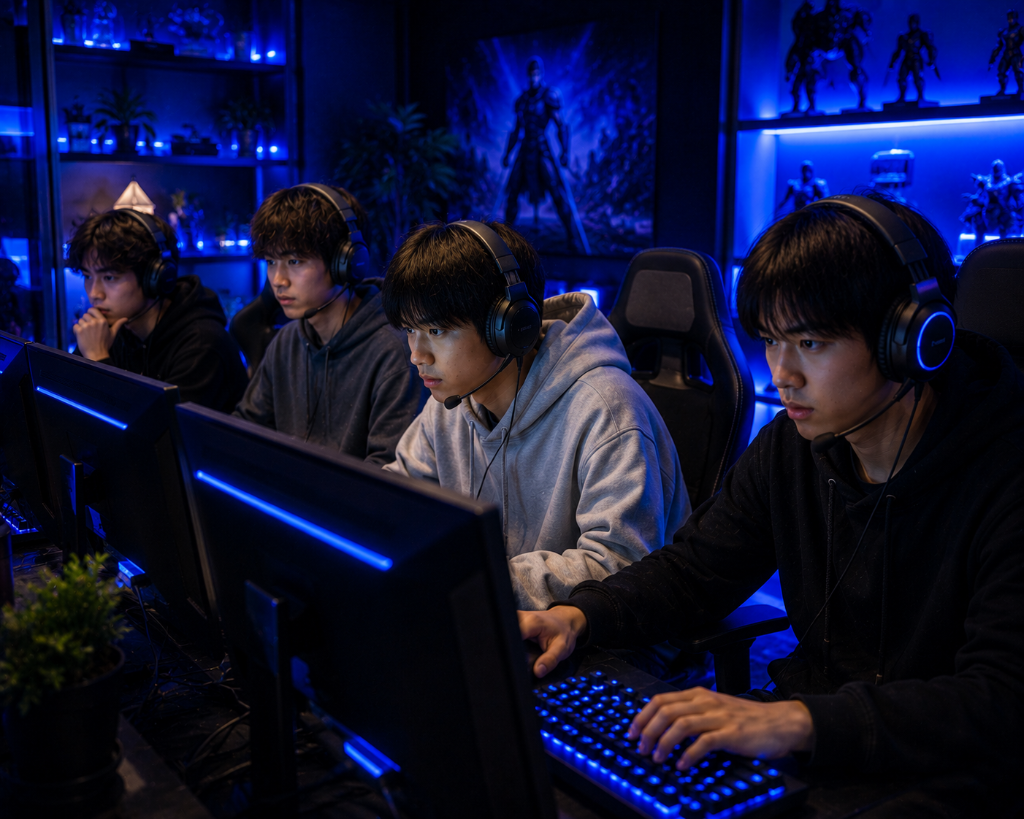
Gaming can look easier from the outside than it feels when you actually start.
You may watch someone play a game online and think, “That looks simple.” Then you try it yourself and suddenly there are controls to remember, menus to understand, objectives to follow, enemies to react to, maps to read, and choices to make.
For someone who is curious about video games as a hobby, that first mismatch can feel discouraging.
You may wonder:
“Is it normal for games to feel this hard at first?”
“Did I choose the wrong game?”
“Am I supposed to understand everything right away?”
“What if this is more stressful than fun?”
Those questions are normal. Many new players expect gaming to feel instantly smooth, but the first experience often includes confusion, mistakes, restarts, and adjustment.
That does not mean gaming is wrong for you.
It means you are meeting the learning layer of the hobby.
The goal is not to expect every game to feel easy. The goal is to understand what a game is asking from you, notice how it feels, and decide whether to adjust, continue, or try something different.
Gaming expectations matter because they shape how you interpret your first experience.
If you expect perfection, every mistake feels like failure.
Every mistake becomes information.
Looking for more beginner-friendly gaming topics? Visit the XP Levels Blog for simple guides that help you explore video games as a hobby without turning your first experience into pressure.
When a Game Feels Different Than Expected
Imagine someone who has never played many video games before.
They see a game trailer that looks exciting. The character moves smoothly. The world looks beautiful. The action looks fun. The player in the video seems to know exactly where to go and what to do.
So the beginner tries the game.
But the real experience feels different.
The camera feels awkward. The controls take time to remember. The map is confusing. The first challenge is harder than expected. The beginner loses a few times and starts thinking, “Maybe I am just not good at this.”
Then frustration builds.
The game looked fun from the outside, but now it feels like work.
Another beginner has the same experience, but interprets it differently.
They realize the trailer showed the outcome, not the learning process. They understand that experienced players make games look smoother because they already know the controls, patterns, and goals.
Instead of asking, “Why am I bad at this?” they ask, “What part feels harder than I expected?”
They notice that the game itself is interesting, but the combat feels too fast. So they lower the difficulty, slow down, and focus on learning movement first.
The game still has challenges, but now the beginner has a better way to respond.
The difference is not talent.
The difference is expectation.
Expectation vs. Reality
Gaming becomes easier to approach when you understand the gap between what games look like and what they feel like.
A game may look simple in a video because you are watching the result. You are not feeling the controller, reading the menus, making decisions, or reacting under pressure.
When you play, you are not just watching the game happen. You are controlling it.
That changes everything.
A beginner may expect:
“I should know where to go.”
But the reality may be:
You need time to learn maps, markers, objectives, and visual clues.
A beginner may expect:
“The controls should feel natural.”
But the reality may be:
Controls often feel awkward until your hands build the habit.
A beginner may expect:
“If a game is popular, I should enjoy it.”
But the reality may be:
A popular game may not match your pace, interest, patience, or beginner stage.
A beginner may expect:
“If I struggle, I’m doing something wrong.”
But the reality may be:
Struggle is often the game teaching you a rule, pattern, or skill.
A beginner may expect:
“Fun should happen immediately.”
But the reality may be:
Some games become fun after you understand what they are asking you to do.
This does not mean you should force yourself through every game.
It means you should learn how to read the mismatch.
Sometimes the problem is your expectation.
Sometimes the problem is the game choice.
Sometimes the problem is difficulty.
Sometimes the problem is the genre.
Sometimes the problem is simply that you need a slower starting point.
The useful question is not, “Is this good or bad?”
The useful question is, “What is making this experience feel different than I expected?”
That question turns frustration into direction.
What to Ignore for Now
When setting gaming expectations, ignore anything that makes your first experience feel like a performance.
Ignore trailers that make gameplay look effortless.
Ignore expert players who make difficult games look simple.
Ignore people who say every beginner should start with a specific classic.
Ignore difficult arguments.
Ignore completion percentages.
Ignore perfect builds, hidden secrets, and advanced strategies.
Ignore the idea that popular games are automatically the right games for you.
Ignore the belief that frustration means you are not a gaming person.
For now, focus on what matters:
Do I understand the basic goal?
Can I control the game well enough to try?
Does the game give me room to learn?
Can I adjust the difficulty, pace, or settings?
Is the challenge interesting, or just draining?
Do I want to continue, adjust, or try a different game?
Those questions are more useful than trying to meet someone else’s idea of what gaming should feel like.

Common Gaming Expectation Mismatches
If a game looks easy but feels difficult, it does not mean you are bad at gaming.
It may mean the game requires timing, movement, camera control, aiming, or decision-making that is invisible when you are only watching.
If your first game feels confusing, it does not mean gaming is too complicated for you.
It may mean the game introduces too many systems too early.
If a game feels repetitive, it does not always mean the game is bad.
It may mean the game’s core loop is not interesting to you, or you have not found the part that makes the repetition rewarding.
If a game feels like a grind, it may mean the progress is too slow, the tasks feel too similar, or the rewards do not feel worth the effort.
If a game feels harder than expected, it may mean you chose a genre that asks for skills you have not built yet.
If you feel frustrated after expecting fun, it does not mean the hobby failed.
It means your first expectation and your real experience did not match.
That mismatch gives you useful information.
You can adjust the game, the settings, the difficulty, the session length, or the next game you choose.
Adjust the Expectation, Not Just the Game
Gaming expectations improve through experience.
Start with one expectation.
Play a short session.
Notice what felt different than expected.
Ask what caused the mismatch.
Adjust one thing.
Try again.
For example:
Expectation: “This game will be relaxing.”
Reality: The game feels stressful because the timer creates pressure.
Adjustment: Try a slower game without time limits.
Expectation: “This game will be easy because it looks simple.”
Reality: The controls require timing and practice.
Adjustment: Practice movement first or lower the difficulty.
Expectation: “This popular game should be fun.”
Reality: The pace feels too fast and chaotic.
Adjustment: Try a different genre or a more beginner-friendly game.
Expectation: “I should make progress quickly.”
Reality: The game rewards slow learning and repeated attempts.
Adjustment: Set a smaller goal for each session.
This process keeps one disappointing session from turning into a final judgment.
You are not only learning games.
You are learning what kind of gaming experience fits you.
Before You Start
Before playing a new game, ask:
What do I expect this game to feel like?
Am I expecting it to be relaxing, exciting, challenging, creative, social, or story-based?
Does this game seem beginner-friendly, or does it expect experience?
Does the game allow difficulty adjustments?
Can I play in short sessions?
Does the game explain what to do next?
Am I choosing this game because I am curious, or because it is popular?
What would count as a good first session, even if I do not fully understand everything?
These questions help you begin with realistic expectations instead of pressure.
While Playing
While playing, ask:
Does the game feel the way I expected?
What feels harder than I thought it would?
Am I confused by the goal, the controls, the map, the pace, or the difficulty?
Is the challenge interesting enough to keep learning?
Do I need to slow down, pause, read, or adjust settings?
Am I still curious, or am I only pushing through frustration?
Is this game giving me a fair chance to learn?
These questions help you respond while the experience is happening instead of waiting until frustration builds.
After Frustration or Disappointment
After a session feels frustrating, ask:
What did I expect before playing?
What actually happened?
Was the mismatch caused by the game, the genre, the difficulty, the controls, or my beginner stage?
Did I enjoy any part of the experience?
Did the game feel challenging in a good way or draining in a bad way?
Would lowering difficulty help?
Would a different game style fit me better?
Should I continue, adjust, take a break, or try a simpler starting point?
These questions help you decide what to do next without blaming yourself or the whole hobby.
Mismatch Is Normal
It is normal for your first gaming expectations to be wrong.
That does not mean you are confused, unskilled, or not meant for gaming.
It means you are learning the difference between watching games, hearing about games, and actually playing them.
Many games feel different once you are the person making decisions. A game can look calm but require focus. A game can look simple but demand timing. A game can look exciting but feel stressful. A game can be popular and still not fit your taste.
That is normal.
You are allowed to dislike a popular game.
You are allowed to lower the difficulty.
You are allowed to stop playing a game that feels like work.
You are allowed to try a different genre.
You are allowed to need more than one attempt before deciding whether gaming fits you.
Video games as a hobby are broad. Your first expectation does not have to be perfect. It only has to give you a starting point.
Expect, Test, Adjust
Gaming expectations are like reading a map before a trip. The map helps, but the real road may still have turns, traffic, and surprises.
Before you judge the hobby, give yourself room to test the experience.
Choose one game. Notice what you expected. Play a short session. Compare that expectation to what actually happened. Then adjust your next step.
Maybe you keep playing.
Maybe you lower the difficulty.
Maybe you try a slower game.
Maybe you choose a different genre.
The goal is not to force every game to be fun.
The goal is to understand what kind of gaming experience feels worth continuing.
Ready to compare different types of games before choosing your next one? Continue your journey in Exploring Gaming, where you can discover genres, play styles, and beginner-friendly paths that match the experience you actually want.
Leave a Reply